Sloe jelly – the rich colour of winter

Geranium,nicotiania, marigolds and nasturtiums are still flowering even though we are in mid November but today was one of those days where it never got light and eventually the rain set in.  To cheer myself up I thought it was time to make sloe jelly – one of the richest coloured preserves around.

Sloes are the fruit of the blackthorn a common part of traditional hedgerow.  The berries are a deep dark shiny purple and cluster round the sharp thorns.  Birds love them but don’t be fooled to try to eat them from the bush as they have a dry sharp flesh which makes your tongue shrivel.  But use them to make sloe gin to sip at Christmas or sloe jelly for use in winter stews or to accompany game they are delicious

I had picked about 1lb of sloes last weekend and earlier in. the week I had cooked them with cooking apples and strained the pulp overnight but as I hadn’t enough time I froze the strained liquid until today.  Gently heating the liquid with sugar and stirring until it came to the boil and enjoying the lovely smell and colour brightened up a wet afternoon.

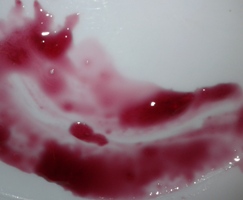
Testing for 'set' before potting up sloe jelly

Testing for ‘set’ before potting up sloe jelly

Now as I write I can smell sausages, chunks of potatoes and red onions gently cooking  and once the onions have caramelised I will add the sloe jelly that didn’t fit in the jar and a slug of red wine – should be good!


Never turn your back on a courgette!

I had been keeping an eye on my courgette plants and picking the young tender courgettes either to chop finely and mix with dressing as a salad or cooking as a vegetable.  All was going so well until I had to work away from home for a few days and when I returned to my horror lurking beneath the giant leaves were some marrow sized courgettes…

The large and the small!

The large and the small!

So a little earlier in the season than planned we ate our first meal of stuffed courgette.

I cut the courgette into horizontal rings and remove the inner seeds and pithy flesh. Setting the rings on a baking tray (top tip line the tray with foil or baking parchment as it makes the washing up so much easier).  Then prepare a tasty filling – I usually use minced beef as a base but nuts or lentils can be used. The most important thing is make your filling really tasty so with a classic mince, onion, garlic and tomato mix you can add cinnamon and dried fruit for a middle eastern taste or go heavy on the marjoram and basil for a Mediterranean flavour.  Put the filling in the centre of the sliced courgette and then cover with a generous amount of strong cheese and roast in the oven ( about 180 degrees C) until the courgette is cooked which is usually around 45 mins. Serve with a tasty chutney and a crusty bread and enjoy. Any surplus slices can be frozen and come out as a surprise long after the courgette season is over!

The next giant courgette will sneak up on me soon despite my best efforts to keep them in check.  That one will be peeled, chopped and cooked very gently in butter to form the base of the delicious recipe in Delia Smiths Complete Cookery Book for Eliza Acton’s Mulligatawny.  But more about that later when there is a glut of tomatoes and onions and the temperature is dropping and we begin to think of winter soup.  For now I am happy with  tender young courgettes sliced in my salad for lunch.

In Search of Elderflowers

Setting off in shorts and flip-flops to pick elderflowers seemed like a good idea until I realised that  the recent hot weather had taken its toll on the elderflowers and the few remaining flowers were in the shadiest, nettliest places so it was with stung legs that I returned home with the requisite number of flower heads.

No not elderflower cordial or champagne ( I knew I was too late to make either of these) but elderflower and gooseberry jam. The main task of the day was to pick this year’s gooseberries, but I knew in my heart of hearts that there was a big bag of last year’s crop lurking in the freezer which just hadn’t made the preserving pan.

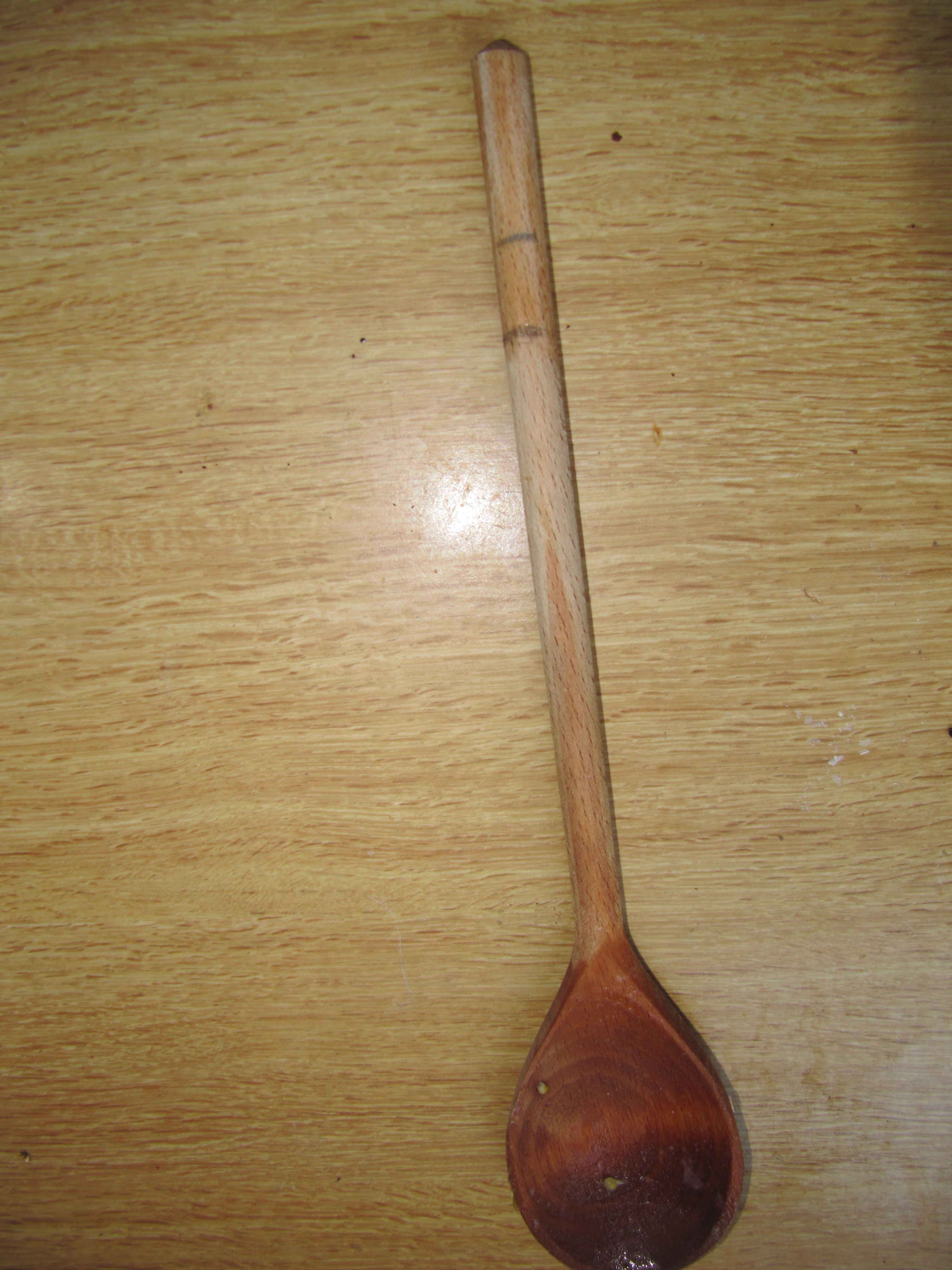
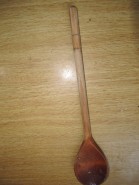
So I set to and weighed the frozen gooseberries (just over 3lb) popped them in the preserving pan with just enough water to cover them and put the elderflowers in a jelly bag (much simpler than cutting squares of muslin and the jelly bag can be washed and reused over and over again). I suspended the jelly bag from the handle of preserving pan so that the flowers were in the water and set the pan over a gentle heat on the stove.  My wonderful Mary Ford Jams, Chutneys and Pickles book gives a detailed description involving pieces of wood and hacksaws to mark the starting level of your jam and therefore work out what level the contents should be when it is reduced by a third.  Always looking Wooden spoon measurefor an easy solution my top tip is to take a wooden spoon and put it handle first into the preserving pan, note the level of the contents and mark with a pencil – you can then use a ruler and pencil to mark it into thirds  and you have an instant measure which can be washed off when finished ready for another day!
So with the gooseberries, elderflower and water very gently simmering out I went into the beautiful sunshine to pick the crop from one of our two gooseberry bushes.  The poor wee bush its branches were touching the ground with the weight of the fruit so when I had finished it looked quite happy and upright again. But what a crop…IMG_8415
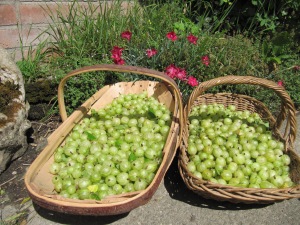
I sat in the sun ‘topping and tailing’ as last year’s fruit cooked. When it had reduced by a third I added the sugar (just over 3lb) and stirred until the sugar had dissolved and Left it to boil. I returned to my topping and tailing!  After a lot more topping and tailing I thought it was time to look for recipes that did not involved topping and tailing and was pleased to find a recipe for gooseberry sauce which sounds rather tasty so 2lb of the smaller untopped and tailed gooseberries were washed, bagged and popped in the freezer ready for making into sauce some time in the future.

By this stage the jam had reached setting point and was ready for potting up. Seven jars  are standing proudly on the kitchen bench. The scrapings from the preserving pan were served on a scone for our afternoon tea and the verdict was ‘very good’!  It has the lovely tang of gooseberries with just a hint of the heady flavour of the elderflower.

And this year’s crop?  The final weigh in from the first gooseberry bush is 11lb! Next job is to make a gooseberry cake to take round to a friend’s house this evening and to stew some ready for a gooseberry fool tomorrow. The rest have gone into the freezer BUT will be used before July net year.



Home Again

Image

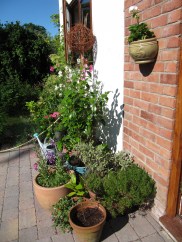
It’s always hard coming home after a lovely holiday.  There is the thought of work, routine and things to be done,  But as soon as the house appears and we enter the drive there is that feeling of homecoming and familiarity and then there is the excitement of seeing what has happened in the garden – always the first thing before unloading the car or checking the house.

IMG_8391Rosa Mundi


When we got back  today I was amazed at how things had grown in eight days.  Yes the weeds have done well but so has the garden.

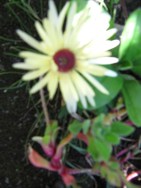
Roses, delphiniums, hollyhock,sweet peas on long stems and mesembryanthemum which bring back childhood memories of lying on my Hollyhocktummy watching the flowers open as the rays of the sun Mesembryanthemumwarmed them only to close again when a cloud passed by.
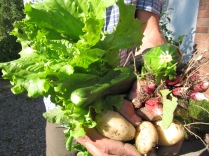


Next stop is to check the vegetable garden and greenhouse to see how things have fared. And as usual there are the successes this time- lettuce, radish, cucumbers, courgettes and potatoes.  The french, broad and runner beans are looking hopeful  but where are the parsnips? They are usually one of our best crops and as for the peas it will be a meagre crop.

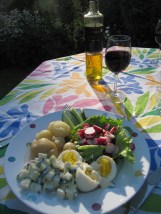
But after unpacking there was a real sense of satisfaction and living the good life when we picked and harvested and then we sat in the evening sunshine and ate a completely home produced meal Just picked(well except for the mayonnaise).  We enjoyed an egg salad with lettuce, radish, basil, rocket and potatoes. Finely chopped courgettes with a tiny red onion and slivers of freshly picked cucumber.  Maybe comingFreshly picked and prepared home from holiday is not too bad!


Link

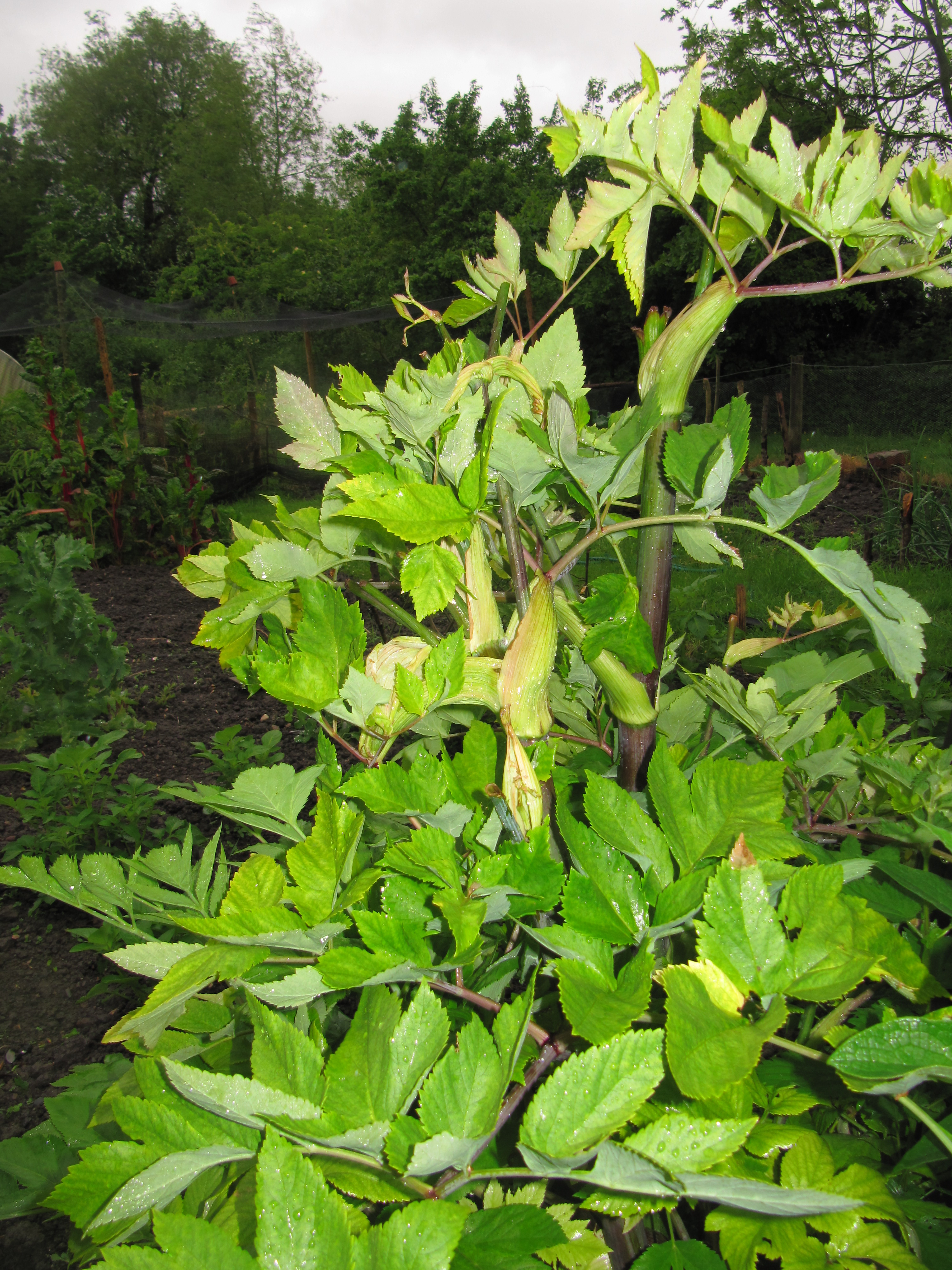
IMG_8359Nature is a an amazing thing just as the rhubarb comes into its own the angelica ( Angelica archangelica) raises its lofty head as if to say  ‘here I am don’t forget how useful I am’

Before I started growing angelica I  associated it with the sticky green candied variety used to decorate cakes and puddings. But now I know better. Fresh angelica is one of those amazing plants that reduces the acidity or sourness in fruit such as rhubarb and gooseberries so that much less sugar is needed to sweeten it.

The plant in the picture is in its third year and as you can see from the swollen stems near the top it is really trying to flower. The flower is a large umbelliferae (Apiaceae) blossom which is really quite beautiful. I have removed the flowers to try and prolong this plant’s life because once it flowers it will die.  However, I feel that this one will probably sneak a flower or two when my back is turned and then gracefully fade in the autumn. But all will not be lost as each flower head produces literally hundreds of seeds which look a bit like fennel or cumin seeds. The seeds should be planted immediately as if kept there is a much lower germination rate. Before winter there will be lots of little seedlings ready to be planted out for next year and the promise of tender fresh angelica. I have just planted three plants into a different herb bed which I grew from last year’s seed just to make certain that the angelica supply will not cease.

So how to use angelica? The simplest use is  adding a few leaves when your are stewing fruit and remove them before serving. ( People don’t really like seeing wilted leaves in their pudding).  Taste the stewed fruit before adding sugar and you will be amazed that it not very sour – add sugar with care as you will probably need much much less than you would normally add.

But if you have a little more time then why not go for pan cooked rhubarb and angelica  served with vanilla infused cream and some home-made shortbread. But the most delightful spring pudding of all is rhubarb and angelica tart where a creamy rich filling made with double cream infused with angelica and vanilla, eggs and sugar is poured over rhubarb and baked.